






Talent Management
21,000 Australians exit the workforce ahead of Christmas as labour market momentum cools





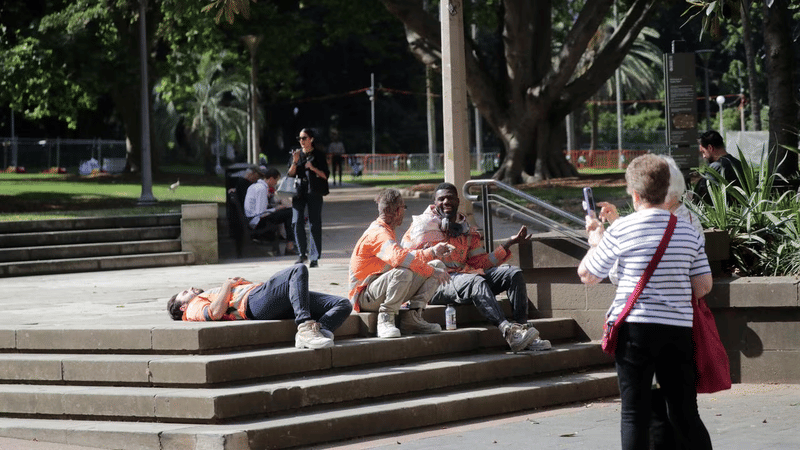
Australia sheds 21,000 jobs in November, driven by a sharp fall in full-time roles, signalling a softer labour market heading into 2026.
Australia’s labour market lost some of its recent strength in November, with 21,000 people stepping out of the workforce just weeks before Christmas, according to new data released by the Australian Bureau of Statistics (ABS).
Even with fewer people employed in November, Australia’s unemployment rate stayed at 4.3%. Economists say this points to people stepping out of the labour force rather than a spike in layoffs. The biggest change came from full-time positions, which dropped by 57,000. Most of that decline was driven by men, who made up roughly 40,000 of the fall, while about 16,000 women moved out of full-time roles.
Part-time employment offered a partial cushion, rising by 35,000 roles. Most of this growth was among women, who added 29,000 part-time positions, while men saw a smaller increase of 6,000.
Russel Chesler, head of investments and capital markets at VanEck, said the figures reflect a labour market that remains tight but is showing deeper structural concerns. “There are issues around productivity that continue to weigh on economic growth and inflation,” he noted, adding that the data is unlikely to shift the Reserve Bank of Australia’s rate outlook for 2026.
Economists, however, cautioned against reading too much into a single month’s shift. Harry Murphy Cruise, head of economic research and global trade at Oxford Economics Australia, described some of the weakness as “noise,” pointing out that November followed an unusually strong October.
He emphasised that broader trends tell a clearer story: “The labour market is gradually losing momentum. Participation is easing, unemployment is inching higher, and forward indicators such as job ads show firms becoming more cautious about hiring.”
With employers entering the new year more conservatively, workforce planning across industries is expected to remain measured, particularly as global economic uncertainty persists.
Even with fewer people employed in November, Australia’s unemployment rate stayed at 4.3%. Economists say this points to people stepping out of the labour force rather than a spike in layoffs. The biggest change came from full-time positions, which dropped by 57,000. Most of that decline was driven by men, who made up roughly 40,000 of the fall, while about 16,000 women moved out of full-time roles.
Part-time employment offered a partial cushion, rising by 35,000 roles. Most of this growth was among women, who added 29,000 part-time positions, while men saw a smaller increase of 6,000.
Russel Chesler, head of investments and capital markets at VanEck, said the figures reflect a labour market that remains tight but is showing deeper structural concerns. “There are issues around productivity that continue to weigh on economic growth and inflation,” he noted, adding that the data is unlikely to shift the Reserve Bank of Australia’s rate outlook for 2026.
Economists, however, cautioned against reading too much into a single month’s shift. Harry Murphy Cruise, head of economic research and global trade at Oxford Economics Australia, described some of the weakness as “noise,” pointing out that November followed an unusually strong October.
He emphasised that broader trends tell a clearer story: “The labour market is gradually losing momentum. Participation is easing, unemployment is inching higher, and forward indicators such as job ads show firms becoming more cautious about hiring.”
With employers entering the new year more conservatively, workforce planning across industries is expected to remain measured, particularly as global economic uncertainty persists.
Author
Loading...
Loading...